UTXO
Unspent Transaction Output
A UTXO is a specific amount of digital currency that remains after a cryptocurrency transaction has been executed. Think of it as the "change" you get back after making a purchase, but in the digital world, it is not a lower denomination—rather, it is a unique output in the blockchain database that can be spent in future transactions.
How It Works: In UTXO-based blockchains, every transaction consumes one or more existing UTXOs as inputs and creates new UTXOs as outputs. These outputs then become available to be spent in subsequent transactions.
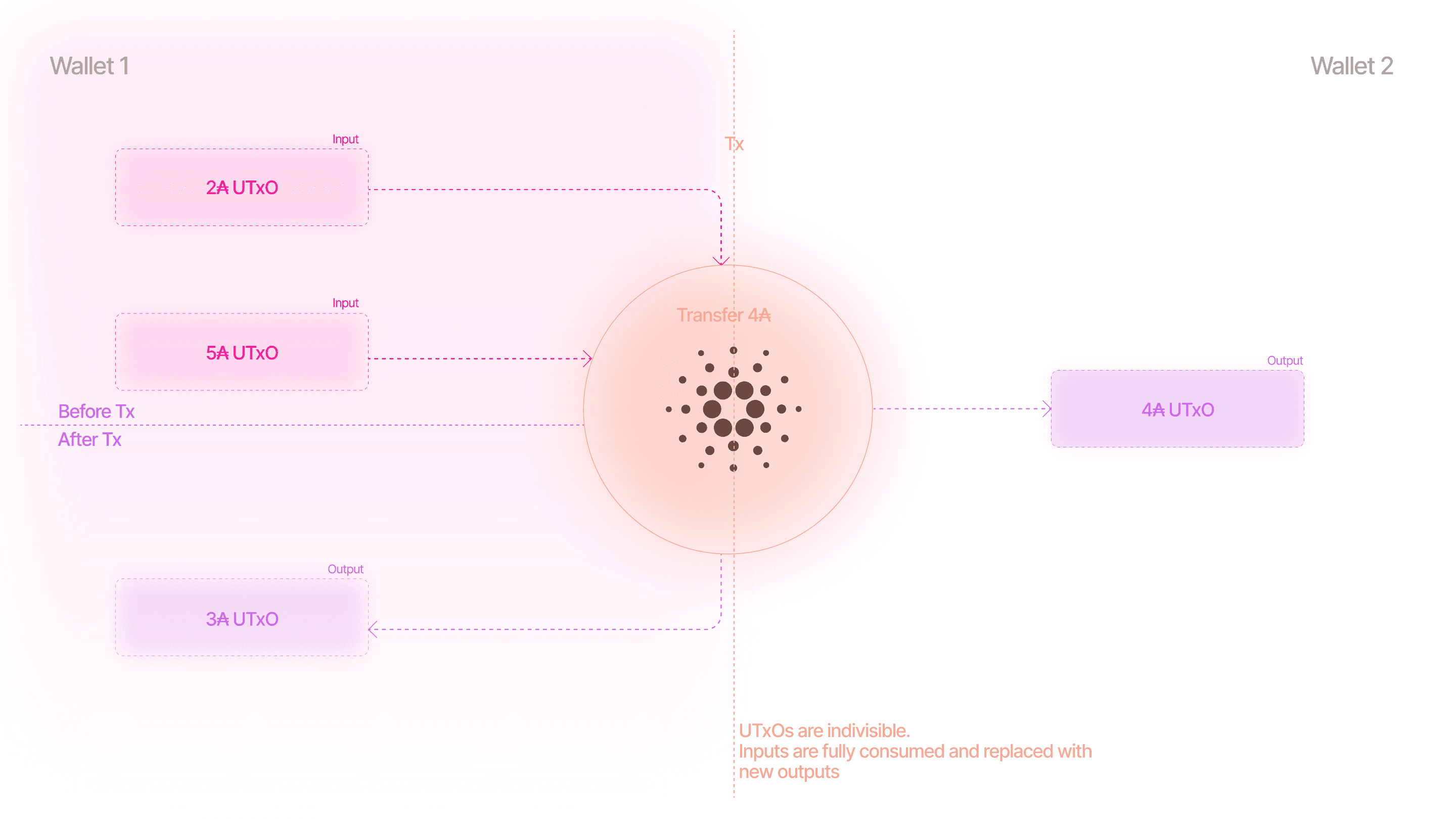
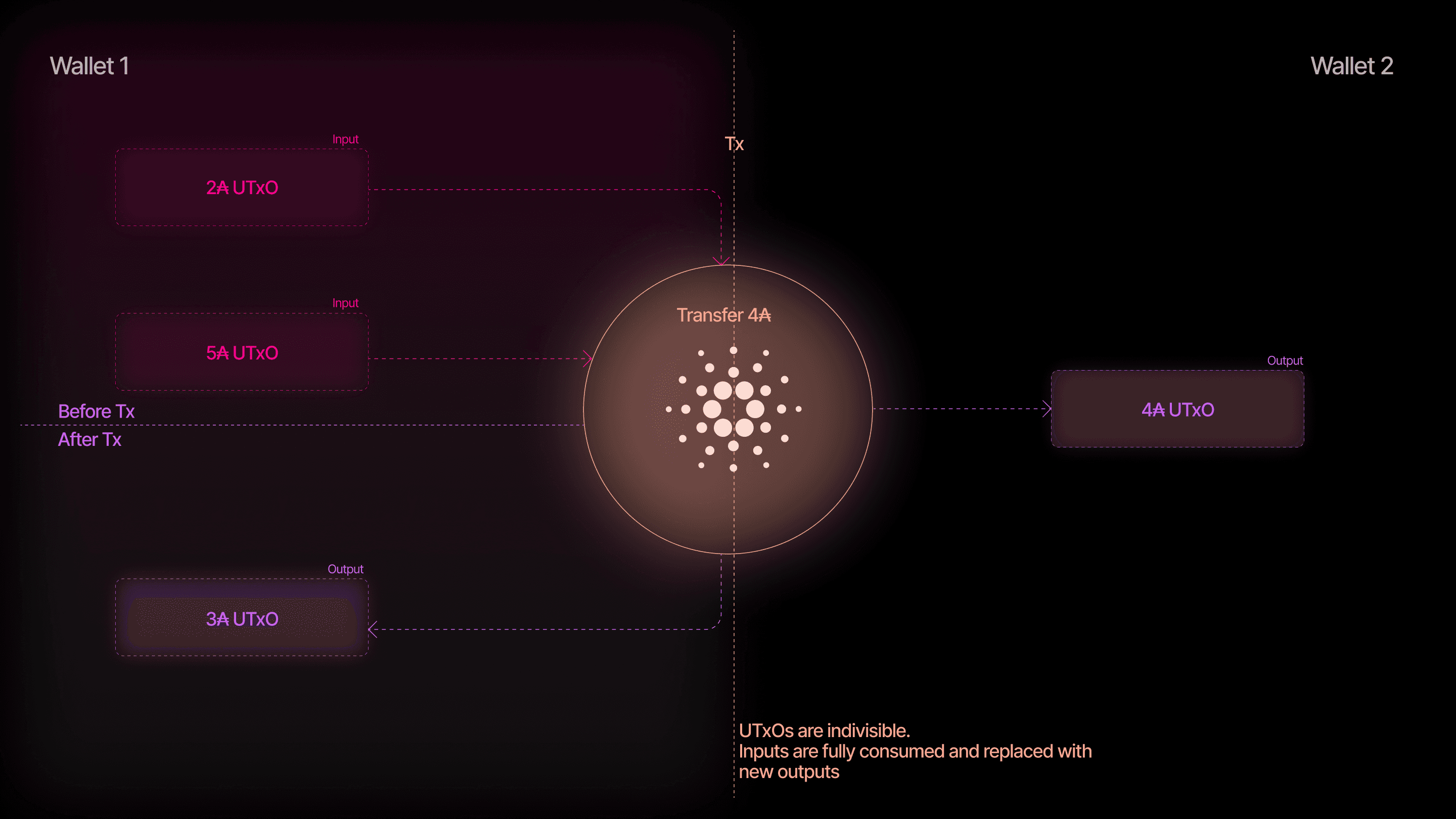
Indivisible Units: Each UTXO is a discrete and indivisible unit of cryptocurrency. If you want to spend only part of a UTXO, the entire amount is used as input, and any leftover amount is returned to you as a new UTXO (like receiving change in cash transactions).
Ownership and Security: UTXOs are associated with a specific owner's public key. Only the owner of the corresponding private key can spend the UTXO by providing a valid digital signature.
Preventing Double-Spending: The UTXO model ensures that each output can only be spent once, effectively preventing double-spending attacks. Nodes in the network maintain a set of all UTXOs to validate transactions and ensure integrity.
Example Scenario: Understanding UTXOs on Cardano
Suppose you receive 50 ADA in a transaction from a friend. You now have a UTXO worth 50 ADA sitting in your Cardano wallet. This UTXO is like a sealed envelope containing exactly 50 ADA that you can spend.
A few days later, you want to buy an NFT that costs 15 ADA. Here's what happens:
The Transaction Process:
- Input: Your wallet takes the entire 50 ADA UTXO as input (you can't just spend part of it - it's all or nothing)
- Outputs Created:
- The NFT seller receives a new UTXO with 15 ADA + the NFT
- You receive a new UTXO with 35 ADA as "change" (50 - 15 = 35)
- A small amount (around 1-2 ADA) goes to transaction fees
The Result:
- Your original 50 ADA UTXO is now "spent" and no longer exists
- You have a new 35 ADA UTXO in your wallet
- You also have a new UTXO containing the NFT you purchased
- The seller has a new 15 ADA UTXO
What Makes Cardano Special:
Unlike Bitcoin, Cardano UTXOs can contain multiple assets. So your "change" UTXO might contain:
- 35 ADA
- Plus any native tokens you already owned
- Plus the new NFT you just bought
Minimum UTXO Requirement
Cardano enforces a minimum ADA that every UTxO must contain. This is a protocol-level requirement — UTxOs below the minimum will be rejected by the network.
Every UTxO on Cardano must hold at least a minimum amount of ADA, calculated based on the size of the UTxO — including any data it carries. This minimum is determined by the protocol parameter coinsPerUTxOByte, currently around 4,310 lovelace per byte.
Why This Matters for Masumi
Masumi's Payment Smart Contract stores contract state directly inside the UTxO as an inline datum — a chunk of structured data containing information like buyer/seller addresses, payment amounts, result hashes, and timing parameters. This inline datum adds significant size to the UTxO, which raises the minimum ADA requirement above a typical wallet-to-wallet transfer.
In practice, a Masumi payment contract UTxO typically requires 1.5–2.5 ADA minimum depending on the datum size and any native tokens included.
Automatic Top-Up
The Masumi payment service automatically ensures that payment contract UTxOs always meet the minimum requirement. If an underfunded UTxO is detected — for example, because it was created under different protocol parameters, or because the datum grew after a result hash was added — the node will automatically top up the ADA to the required minimum during the next transaction that touches that UTxO.
This top-up is taken from the interacting wallet (selling or purchasing wallet) and remains locked in the contract UTxO until funds are collected. It is not a fee; the ADA stays within the Masumi contract and is returned as part of the normal collection flow.
Make sure your selling wallet and purchasing wallet always hold enough ADA to cover both transaction fees and any potential min-UTXO top-ups. For most services, a buffer of 5–10 ADA per active payment is sufficient.
Transaction Fees
The Masumi Network and the underlying Cardano blockchain will charge you transaction fees, which are important to be aware of when developing your Agentic Service.
Wallets
How is the node managing wallets for your Agentic Service? What do you need to do to secure your funds in these wallets?